A little funny things of baby giraffe can bring a lot of happy for you. That is somethings you need in your live. You can find more than this if you know the factoflife about giraffe.
Fun information and facts about giraffe for kids
Fact #1
The giraffe is the tallest mammal on earth. New-born baby giraffes are even taller than mosthumans. And males can grow up to 5.5 meters (18 feet) tall.
Fact #2
The neck of a giraffes is too short to reach the ground. So it has to awkwardly spread its front legs or kneel to reach the ground for a drink of water.


A giraffe face
Fact #3
Like snowflakes and human fingerprints, no two giraffes have the same spot pattern.
Fact #4
Baby Giraffes can stand within half an hour of being born. After only 10 hours, they can actually run alongside their family.

A baby giraffe
Fact #5
Giraffes only need 5 to 30 minutes of sleep in a 24-hour period.
Fact #6
Giraffes only need to drink once every few days. Most of their water comes from plants they eat.
Fact #7
The idea that giraffes make no sound is untrue. When giraffes snort, bellow, hiss, etc, they make flute-like or low pitch noises beyond the range of human hearing.
Fact #8
Before mating, the female giraffe will first urinate in the male's mouth.


Giraffe couple in love
Fact #9
Giraffes are ruminants. This means that they have more than one stomach. In fact, giraffes have four stomachs, the extra stomachs assisting with digesting food.
Fact #10
Drinking is one of the most dangerous times for a giraffe. While it is getting a drink it cannot keep a look out for predators and is vulnerable to attack.
Fact #11
Male giraffes sometimes fight with their necks over female giraffes. This is called “necking”. The two giraffes stand side by side and one giraffe swings his head and neck, hitting his head against the other giraffe. Sometimes one giraffe is hit to the ground during a combat.
Fact #12
A giraffe's habitat is usually found in African savannas, grasslands or open woodlands.

Fact #13
The hair that makes up a giraffes tail is about 10 times thicker than the average strand of human hair.
Fact #14
Giraffes have a great sense of sight and smell and are able to run at speeds up to 35 miles per hour.

Fact #15
However, a baby giraffe in the wild is vulnerable because it has a shorter gait and is unable to keep up with the herd if a predator is detected. In the days and weeks following a birth, a mother giraffe will sometimes leave her baby hidden in tall grass for a few hours while she eats and roams.
Read more topic at games, news,...
Read More

What to expect in Paper Mario: Color Splash


Rather than have two concurrent Mario RPG series, Nintendo has kept most of that genre’s trappings confined to the Mario & Luigi series for over a decade. Paper Mariomay have taken the torch from Super Mario RPG with its first two entries, but later titles strayed further and further from the formula. Super Paper Mario was a platformer for all intents and purposes, and Sticker Star took a different approach altogether. The 3DS title eliminated XP and leveling, severely handicapping any sense of progression. In addition, combat was regulated by a finite collection of stickers that Mario would collect in the world. As polarizing as Sticker Star was for fans of the series, Paper Mario: Color Splash doubles down on its most frustrating elements and makes them even worse.

What makes Color Splash such a tremendous disappointment is the fact that so much of it is great. Throughout the game’s lengthy story, it consistently made me laugh with its clever writing and numerous nods to Mario history. Prism Island plays host to a wide variety of locations and activities, and I was always curious what the game would be having me do next. Restoring color to the world is Mario’s goal, and doing so tasks him with appearing on a game show, assembling a train, organizing a tea party at a haunted hotel, and a ton more. It even manages to sneak in some great parodies and references that rarely seem forced.

Just about everything in Color Splash is instantly likable except for the thing that you spend the most time doing. Each time I encountered an enemy, it felt like a punch to the gut. I’d often be walking around, admiring the game’s gorgeous visuals and wondering what it would be having me do next. Then, I’d encounter an area filled with enemies and I’d be reminded of how thoroughly Nintendo dropped the ball with this game.

Numerous things are terrible about the combat system, and any one of them is bad enough to bring down the quality of the game as a whole. Together, they have the ability to make the experience miserable at times.

Like Sticker Star, combat is regulated by single-use cards that Mario can buy or find in the environment. Since there isn’t any kind of infinite base level attack that can be pulled out at any point, I was frequently required to waste powerful cards on enemies that were already near death. This system can back you into a corner. If you’ve run out of hammers and all you have are a bunch of jump cards, good luck trying to take out that Shy Guy with a spiked helmet on his head.

Oftentimes, powerful cards will just be taken from you without warning. At random points, Kamek will fly by at the beginning of standard battles and turn all of your cards over. You’re forced to blindly choose cards to play, meaning that you could easily waste one of your most powerful attacks on a weak enemy. Some fights even feature enemies that hop onto the playing field and eat your cards before you have a chance to use them.This is especially infuriating if it’s a Thing card. These are special cards that transform the battlefield into a photorealistic environment, and often do massive damage to your enemies. More often than not, these rare items are required to finish off a boss or advance the story. If you lose it in one of several random ways, you’re forced to exit the area you’re in and head back to the main hub world to buy another.

As boneheaded as the entirety of the combat system is, it’s made even worse thanks to the method in which you attack. It’s insane that GamePad functionality has been so clumsily incorporated this late in the Wii U’s lifecycle. Each time you want to attack, you have to scroll through a giant deck of cards on the GamePad screen with the stylus. You then slide the cards that you want to use up to the top of the screen. Once your cards are in place, you confirm that they are the cards that you wish to attack with. The GamePad takes you to another screen that has you tap and hold on each individual card to determine how much paint you want to put into them (paint increases attack damage). When your paint levels are where you want them to be, you hit confirm again. At the next screen, you flick the cards up with the stylus to actually attack. This song and dance happens every single time that it’s your turn during combat. There is an option in the settings menu that allows you to eliminate one of the “confirm” screens, but the process remains painfully slow.
Wanna take a quick look at funny pictures with captions that can help you relax effectively.

This is all the more maddening when you realize how fruitless combat is to begin with. Sticker Star’s dumbed-down progression system is even more severely neutered in Color Splash. Mario can expand his paint reserves by collecting hammers after fights, and his HP goes up by 25 at six predetermined points in the story. Outside of a few upgrades that increase the number of cards that Mario can play in one turn, there is nothing else that you can do to feel more powerful.

Let’s break this down. You fight by playing single-use cards. If you win, you’re rewarded with coins. You use coins to...buy more cards. With that system in place, why would anyone ever want to encounter an enemy in the field? I never once felt like any of the standard fights were doing anything to progress the story or my character’s abilities. It’s maddening. I got to a point in which I started trying to flee from every fight. This works on occasion, but it’s terrible when Mario falls flat on his face while attempting to flee and you’re forced to go through another awful round of card-based combat.

There are other unfortunate elements in play that aren’t tied to the combat. Several stages require you to play through their entirety two or more times. At five different points in the story, progress is halted unless you’ve found an entire “rescue squad” of Toads that are spread throughout the world. It’s discouraging to think that you’re about to enter a new area, only to be told that you can’t continue without finding five or six Toads that are hiding in unspecified locations in previous levels.

I changed my tune on one of my favorite areas by the end of it. The haunted hotel isn’t combat-heavy, and focuses more on puzzle solving. I enjoyed trying to hunt down a collection of Toad ghosts so that they could organize a tea party. This area has several clever puzzles, and the reduced focus on combat was really helping me spend time with the things I liked about the game. When I was down to the last Toad that I had to collect, a grandfather clock rang and I was met with a game over screen. It had failed to adequately explain to me that there was a time limit for this area, and I was forced to start over from the beginning.

Even the sidequests feel useless. The biggest one involves temples in which you compete in rock-paper-scissors. Your prize for winning? Coins that you use to buy cards, and cards that you use to win fights that give you coins.

Every level has blank spots for Mario to fill in with paint. I initially enjoyed this side activity and shot for 100-percent “colorization” on every stage. This pursuit stopped once I realized that a character called the Shy Bandit pops up randomly to suck the color out of levels with a straw. If you don’t catch him in time on the world map, your 100-percent colorization can go down to next to nothing. Even if you do get full colorization in an area, your reward is just unlockable music tracks.Check out my list of fun, weird and just plain amazing fact of life I have found.


That’s never hard to do, because everything is a goddamn Toad in this game. Previous Paper Mario games have featured a wide variety of NPCs, complete with tons of different looks and personalities. In Color Splash, it’s just a bunch of Toads of different colors. Sometimes they’ll have scarves. A couple of them had pirate hats. In the end, they’re all just Toads. Oh, you need to climb a mountain to talk to a wise old sage? Just a Toad. He doesn’t even have a beard. Ghosts are all over this hotel? They’re just Toads with an aura effect around them. I think one of them had glasses.Often, the method to advance the story will be completely unclear. Your talking paint can named Huey is supposed to help point you in the right direction if you press up on the d-pad, but he frequently has no advice beyond “Hey, maybe you should talk to some Toads around town!”

I can’t remember the last time I’ve been so thoroughly divided on a game. One part of me loves it. It’s genuinely funny, and the writing and locations are fantastic. Prism Island is gorgeous, and the soundtrack meets the high bar of quality that Mario games are known for. In the end, though, I spent most of this game trying to avoid playing the biggest part of it. Every combat encounter reminds you of how broken a critical element of the game is, and they happen frequently. It’s staggering how much this one system routinely destroyed my enthusiasm for the game. Would you like to get free online games for kids ?

With more traditional RPG mechanics and a real progression system, Paper Mario: Color Splash could have been one of the best games in the series. Because of some unfathomably ill-conceived decisions during the development process, it’s one of the very worst.
Read More

#7: TACTICS OGRE: LET US CLING TOGETHER

When they needed to come up with a name for their new game, the creators of Final Fantasy Tactics apparently stuck random words up on a wall and threw darts at them while blindfolded. At least, that's the only logical explanation I can come up with for giving a game a title like Tactics Ogre: Let Us Cling Together.

Image result for TACTICS OGRE

Believe it or not, Tactics Ogre is actually a series of games, with some bearing the moniker Ogre Battle rather than Tactics Ogre. But despite what the titles may have you believe, these games do not feature any tactical or battling ogres as playable characters. Tactics Ogre: Let Us Cling Together was the second game in the series to be released way back in 1995, although western audiences probably weren't exposed to it until it was remade for the PSP in 2011. It's a tactical RPG, allowing you to build a team of characters that can specialise into different classes. The game itself was actually very well received despite its highly unusual name.

Ogres are like onions...they have layers. And you might find the story of this game's title has some layers to it as well. According to Wikipedia it was originally titled Lancelot: Somebody to Love, then was renamed to Tactics Ogre: The Bequest of King Dorgalha. I'm not entirely convinced that either of those titles would have made more sense than what the game's final title was. I'm still not entirely sure what the Let Us Cling Together subtitle refers to - whether that's supposed to be a reference to the party members sticking together through their hardships or what. Regardless, the end result is one of the strangest and oddest titles of a video game that we've seen.
Wanna take a quick look at funny pictures with captions that can help you relax effectively.

#6: STREET FIGHTER ZERO 2'

Capcom is somewhat infamous for making incremental updates to their Street Fighter series of games and differentiating them by adding seemingly arbitrary words to the title - gradually adding more and more words the more updates the game received. Who can forget Super Street Fighter II Turbo HD Remix?

The game that probably takes the cake in this series though is Street Fighter Zero 2'. Known as Street Fighter Alpha is North America, Street Fighter Zero was a series of games released by Capcom mostly between Street Fighter II and Street Fighter III (and as if you weren't already confused enough, they also released a game titled Street Fighter Zero 2 Alpha, because Capcom).

For a start, it doesn't really make much sense to give the game a title consisting of the phrase "Zero 2" - but Capcom went one step further than that with one of their signature updates. This time...they couldn't even be bothered to add a real word to the title, and just added an apostrophe onto the end instead when they released Street Fighter Zero 2'. It's as if whoever wrote the title of the game made a typo and said "Oops...uhhh...yeah that'll do".

This was supposed to be pronounced "Dash" - so the official title of the game was read as "Street Fighter Zero 2 Dash". I guess because the apostrophe looks kind of like a dash? But don't think other versions were immune to this - oh no no no. Europe received Street Fighter Alpha 2' - but for some reason, this was not supposed to be read as "Dash", but was instead meant to be read as..."Prime". Yep. So the European version of the game, despite having that same apostrophe, was meant to read differently, as "Street Fighter Alpha 2 Prime". Your guess is as good as mine on this one. At least North America received the game as Street Fighter Alpha 2 Gold, a slightly more sane title that didn't feature random apostrophes.

Not to be outdone by its predecessor though, the Street Fighter Zero 3 series released games with "Upper" and "Double Upper" in their title (which were officially marketed as having an up arrow and two up arrows, respectively).

#5: BOOBY KIDS

In a list of weird video game titles, it's not altogether unexpected to see Japanese games heavily featured in it. Unlike some other games though, there isn't really a translation error with Booby Kids - that's just its name. In fact, it's the opposite of an error of translation into English - this NES game is a home conversion of an arcade game that had a different title, but was actually supposed to be called Booby Kids, so they changed the title to the intended name with the port to NES.

The game involves you controlling one of the Booby Kids, where you need to navigate through a maze of sorts, collect fruit and make it to the exit while avoiding the bad guys. You can protect yourself from the bad guys by digging holes in front of you that they can fall into or by setting bombs, that can also destroy parts of the environment. The bad guys will infinitely respawn, but seem to just walk around randomly and don't try to actively chase you.

The game is called Booby Kids because of the digging of holes and setting of bombs that are supposed to be booby traps. And while it does seem to make sense once you know the context, if you just looked at this title without knowing what the game was about, you'd definitely do a double take.

The game even saw a sequel on the Gameboy - titled Booby Boys. That should keep you all snickering for a while.

#4: IRRITATING STICK

Now here's a game to shake a stick at. See what I did there?

Irritating Stick is a dumb name for a game. Let's get that out there right now. It somehow simultaneously tells you what the game might be about while not telling you anything about what the game is about. So for those of you who haven't played it, I'll explain what the premise is.

Remember those high school experiments you used to make where you had a maze of wire and you needed to get a metal ring from one side to the other without touching the wire? That's essentially what Irritating Stick is - it's that concept in video game form and cranked up in classic Japanese style. You have a...uhhh...stick, that's apparently pulsing with 100,000 volts of electricity, and you need to move it from one end of the course to the other within the time limit without touching anything, including the sides of the course or any obstacles in it. If you touch anything you'll fail the course and the game will "zap" you by sending a large vibration to your controller. It's actually based on a Japanese game show where the contestants get real-life electric shocks when they mess up. The game is usually associated with being far more frustrating than fun. 

I suppose, once you look at it in context, Irritating Stick doesn't sound quite as stupid of a title as it initially does - but it's not really the stick you're going to get irritated at here, it's the game itself, and probably the announcer too.

If you think this title is bad, consider for a moment that it could have actually been even worse. The Japanese word used here for "Irritating" could be more closely translated as "Vibrating"...and that is a rabbit hole I'm not going down.

#3: SPANKY'S QUEST


Now we're starting to get down to the truly ridiculous. At number 3 on this list, we have Spanky's Quest, that was released on the SNES and Gameboy.

At it's core, Spanky's Quest is a pretty innocent game about a monkey that gets captured by a witch and needs to throw balls at different kinds of walking fruit in order to obtain keys to unlock doors that eventually lead to freedom. The game actually was reasonably well received with a surprisingly good soundtrack, despite its unusual concept and its....less than innocent sounding title.

Alright, so who was the genius who thought that Spanky the monkey was a good name for a kid's video game character? The original Japanese title of the SNES version translates more closely to Monkey Reflections: The Adventures of Mr. Jiro, or Lucky Monkey in the case of the Gameboy version. So what the heck happened here? When this game was being localised into English, didn't anyone put up their hand and say "Ummm, guys? I don't think Spanky is a good name for a monkey in English..."

Somehow though, the name made it through, and now the game is probably better known for its sexually suggestive title than the game itself.

#2: WILD WOODY

Sticking with the theme of inappropriately named kid's video game characters, at number 2 we have a game released late in the Sega CD's lifespan: Wild Woody, a title that honestly sounds more like a porno movie than a kid's video game. And make no mistake - the sexual innuendo in the title was quite deliberate.

In this game you played as an anthropomorphic pencil, who defeated his enemies by rubbing them out with his eraser on his butt. He also opened crates and doors by rubbing his butt-eraser against them. I wish I was joking. He could also draw sketches to defeat enemies or power himself up in some way. One of these was a mermaid, that the developers some years later revealed had an Easter egg that showed her topless. 

The game actually had an incredibly good soundtrack, but the rest of it should be best forgotten. Somehow, the creators of Sonic the Hedgehog found a way to make a 2D platformer that played incredibly poorly, with bad hit detection, imprecise controls and awkward movement, topped off with some of the corniest pre-rendered CG cinematics the 90s could cook up. All in all the game was bad, so it probably wasn't something you'd really want to play anyway.

There's no excuse of translation errors or anything with this one, the title was very much intentional. It is perhaps one of the worst titles for a video game ever conceived.
Check out my list of fun, weird and just plain amazing fact of life I have found.

#1: SEAMAN

Ding ding ding! And we have a winner! Number 1 on this list couldn't be anything else other than...ummm...Seaman. The title of this game is just a gift that keeps on giving, and I can't help but be reminded of that "Super Best Friends" South Park episode where Seaman is constantly correcting the other characters and the narrator whenever they refer to him as "Semen".

Anyway, the Dreamcast game Seaman (you bet I'm gonna keep saying that) is actually kind of a unique and interesting game. It's a virtual pet game where you can communicate with your pet Seaman (or Seamen, as you could have more than one in your tank) using a special microphone peripheral that plugged into the console's controller. The game featured voice recognition technology and your Seaman spoke back to you, answering your questions and asking you questions of his own. The Seaman itself was a weird fish-like creature with a human face that eventually evolved into...something, and getting him to that evolved state was the ultimate goal of the game.

Seaman is actually narrated by none other than the late Leonard Nimoy - and I don't think I really need to explain why hearing him say "Seaman" over and over never gets old.

"Your first step will involve preparing the tank for Seaman's arrival".

They could have thought of many better titles really than Seaman. How about "Fishman"? Or "Waterman"? Or "Oceanman"? Or "Weird evolving fish thing with a human face that speaks English - man". No, they opted to go with possibly the worst choice - Seaman. I guess we can't really complain about it too much - because it has given us much entertainment.

Would you like to get free online games for kids ?
Read More

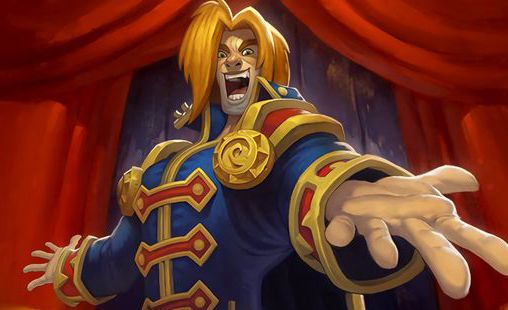
Hearthstone: What happened to Yogg and where Barnes landed


Now updated to reflect the Karazhan meta. Find out what happened to Yogg and where Barnes landed! 
Have a look at our wide range of funny pictures, quotes and much more.

With the dust barely settled on this year’s World Championship, and the new Mean Streets of Gadgetzan set due to arrive in early December, Hearthstone meta is relatively stable. So now seems a good time to re-evaluate the game’s most powerful legendary cards. For this latest update to our list, I polled my fellow casters and the pro players competing at BlizzCon. The results reflect the cards currently playable in the Standard format, up to and including the One Night in Karazhan adventure.

For many Hearthstone players, particularly newer ones, deciding which legendary cards to craft with your hard-earned dust is a stressful experience. 1600 dust isn't easy to come by, and the setback from crafting a card which ends up being useless can be potentially devastating.

If you are a person who likes to discover nature, let’s follow factoflife to get all wanted info.


To help guide your crafting decisions, I asked our experts to rank their top 25 legendary cards. Using their input, combined with my own expertise, I've created a list that represents a comprehensive guide to which legendaries you need. Just start at #1 and work your way back until your collection is bristling with power.

The plan isn't quite that simple of course. If you're looking to play a specific deck, or favour a particular class, you should give extra weight to the legendaries that are core to those decks. You should still pay attention to the cards listed highly here due to their versatility, since those will go the furthest to increasing the power of your collection overall. 

As ever, we’ll be updating this list once the most powerful cards from the new set have made their mark.
Get game, app reviews and free online games for kids, for girls and others.
Read More
Next PostNewer Posts Previous PostOlder Posts Home